
The Role of Targeted Marketing in Restaurants

TL;DR:
Targeted restaurant marketing focuses on delivering personalized offers to specific customer segments to improve conversion and loyalty. Connecting data from multiple sources enables behavior-triggered campaigns that enhance personalization, retention, and revenue. Implementing in-house strategies and local digital channels maximizes guest lifetime value and reduces reliance on costly third-party platforms.
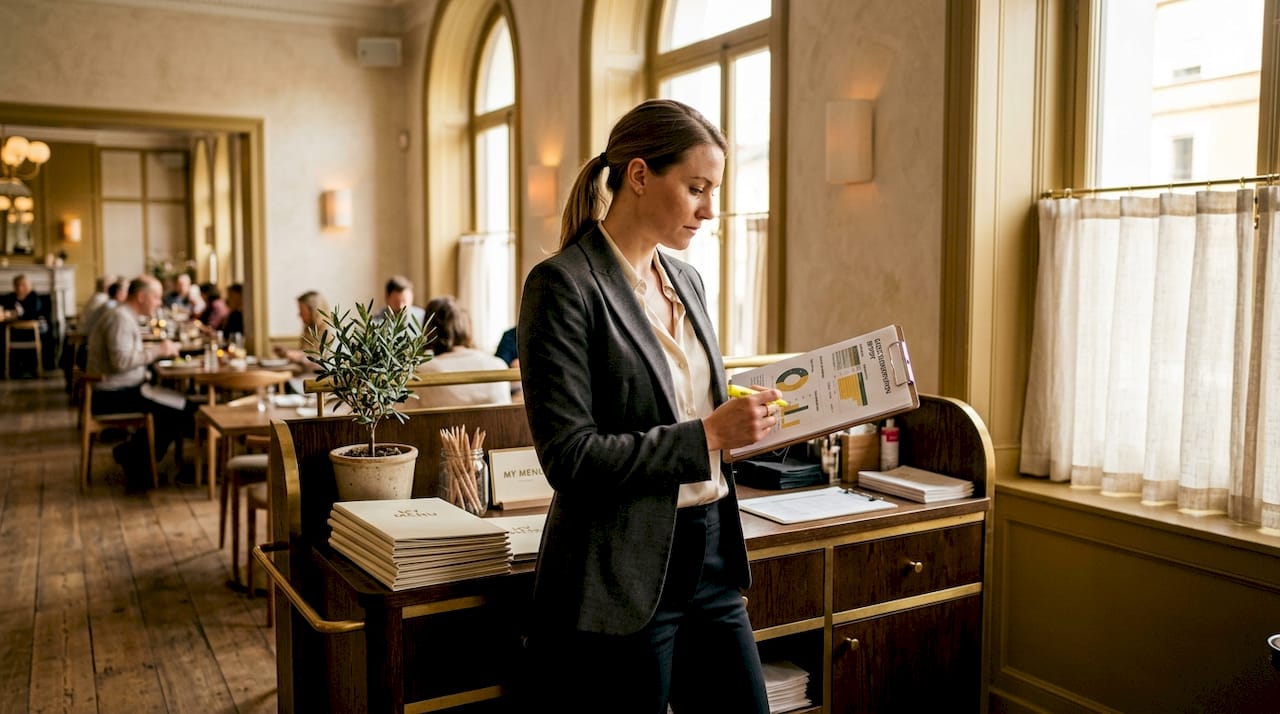
Most restaurant owners pour money into promotions that reach everyone and convert almost no one. A sponsored post seen by ten thousand people in a fifty-mile radius sounds impressive until you realize that nine thousand of them will never drive to your neighborhood. The role of targeted marketing in restaurants is to cut through that noise, placing the right offer in front of the right diner at exactly the right moment. Connected marketing systems across discovery, ordering, data capture, and retention create a self-reinforcing growth engine that generic advertising simply cannot build.
Table of Contents
Key Takeaways
Point | Details |
Segmentation beats broad reach | Dividing guests by behavior, location, and preferences turns wasted ad spend into measurable, high-converting campaigns. |
Data unification is the foundation | Combining POS, reservation, and ordering data into unified guest profiles powers personalized offers that drive repeat visits. |
In-house marketing moves the needle | Staff upselling, loyalty signups on-premise, and ambient cues increase check size without a single dollar of external ad spend. |
Direct ordering builds long-term value | Owning your ordering channel protects margins and gives you the guest data needed to run behavior-triggered campaigns. |
Retention compounds faster than acquisition | Repeat guests spend significantly more over time, making loyalty-focused marketing more profitable than constant new-customer chasing. |
What targeted restaurant marketing actually means
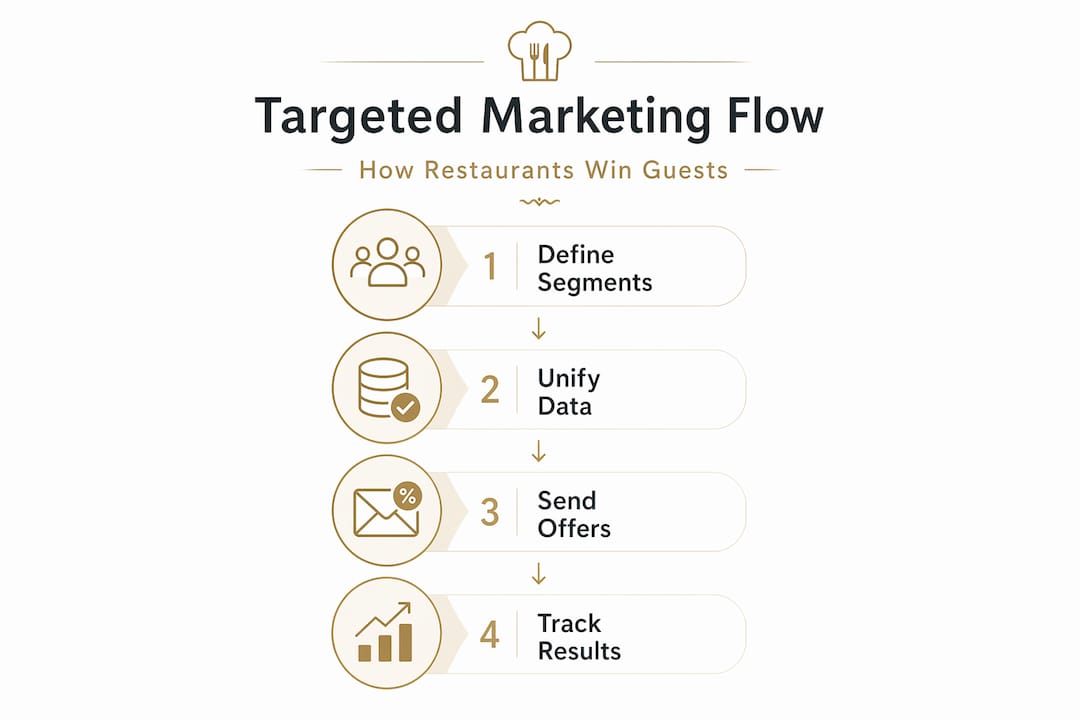
Targeted restaurant marketing is the practice of identifying specific customer groups and delivering messages, offers, and experiences designed for them alone. It sounds simple. In practice, most restaurants skip it entirely because defining a meaningful segment takes more discipline than blasting a discount code to an email list.
The most practical starting point is the 5Cs framework: Company, Customers, Competitors, Collaborators, and Context. Running your restaurant through each lens reveals where your strengths genuinely align with an underserved audience. A fast-casual Thai concept near a university, for instance, might discover its strongest segment is budget-conscious students ordering lunch on weekdays, not the weekend brunch crowd it keeps trying to attract.
Effective segmentation criteria for restaurants include:
Visit frequency: First-timers, occasional visitors, and regulars each need a different message and a different offer.
Daypart behavior: A guest who only visits for dinner is a candidate for a targeted happy hour campaign, not another dinner special.
Cuisine and dietary preferences: Captured through order history, these allow you to promote menu additions that feel personally relevant.
Geographic proximity: Guests who live within two miles respond to walk-in promotions; those who drive from across town respond to planned-event campaigns.
Spend tier: High-value guests deserve a loyalty experience that reflects their status, not the same generic coupon everyone else receives.
Pro Tip: Start with just two or three segments rather than trying to map every possible customer type. A tightly defined segment you actually act on is worth infinitely more than a perfectly drawn audience matrix that sits in a spreadsheet.
Powering campaigns with unified guest data
Here is where most restaurant marketing efforts break down. Operators collect data in silos: reservations in one system, online orders in another, loyalty points in a third app. None of those systems talk to each other, so every campaign still starts from scratch. Unified guest profiles combining POS, WiFi, reservations, and online orders unlock real-time marketing actions that no fragmented system can replicate.
When data is unified, behavior becomes the trigger rather than the calendar. A guest who visited twice last month and has gone silent for three weeks gets an automatic win-back offer. A guest who always orders a specific appetizer gets a notification the moment a related new dish launches. This level of personalization is no longer a luxury. Personalization drives more consistent revenue than generic discounting, with 79% of customers more likely to visit when they receive a personalized offer and over half reporting they spend more as a result.
Campaign type | Generic approach | Behavior-triggered approach |
Win-back | “We miss you! 10% off” to all lapsed guests | Offer sent only to guests who visited 3+ times before going quiet, with a reward tied to their favorite item |
Birthday | Same birthday message to everyone | Personalized offer based on their actual order preferences, sent 48 hours before the date |
Upsell | Table tents promoting the same add-on to all guests | Digital prompt showing the dessert most ordered by guests with a similar order profile |
Loyalty milestone | Generic “You earned a reward” message | Message highlighting the specific reward earned, with a suggested next visit occasion |
Pro Tip: Avoid the trap of competing on discount depth. Guests who come back only for deals are the most expensive customers you can have. Use personalization to add value, not to race to the lowest price.
In-house marketing that maximizes every visit
External advertising brings guests to your door. What happens inside determines whether they come back and whether they spend more. This is the foundation of what practitioners call 4 Walls Marketing: every touchpoint inside your restaurant is a marketing opportunity.
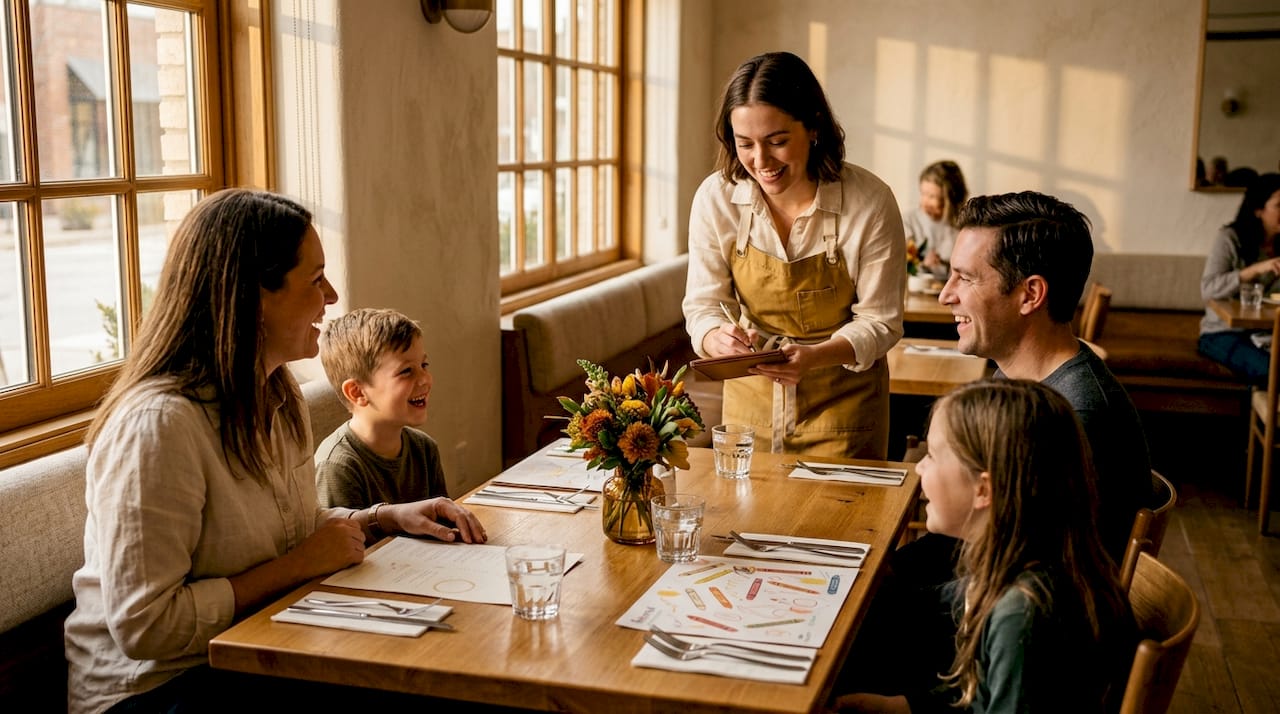
Repeat customers spend on average 67% more than first-time visitors. That statistic alone should shift how you think about in-house experience design. The guest already sitting at your table is your highest-probability revenue opportunity, and most restaurants underuse their staff as a high-converting marketing channel.
Consider what a structured upselling approach looks like in practice. Rather than leaving servers to improvise, successful operators write specific scripts for their top add-ons and pair them with weekly team incentives. “Would you like to add our house-made truffle butter for two dollars more?” outperforms “Would you like anything else?” by a measurable margin, every single time.
Beyond staff, the physical environment carries significant marketing weight:
Menu design: Placing high-margin items in the upper right corner of a printed menu or at the top of a digital menu leverages natural eye movement to increase their order rate.
Loyalty enrollment at the point of sale: Asking guests to join your loyalty program during payment, rather than after they walk out, captures enrollment at peak satisfaction.
Ambient messaging: Table cards, receipt messages, and even the WiFi login screen are low-cost vehicles for promoting upcoming events, new menu items, and direct ordering options.
Feedback capture: A short post-meal feedback prompt via QR code feeds data back into your guest profiles and signals to the guest that their opinion matters.
Tracking the impact of in-house tactics requires clear KPIs: average check size, add-on attachment rate, and loyalty enrollment rate per shift. Without these numbers, you are guessing.
Local digital channels that convert browsers into diners
Digital marketing for restaurants works best when it is intensely local. A paid ad seen by someone two states away is money burned. High-intent local keywords like “best Thai food near me” or “outdoor dining downtown [city]” deliver measurably higher conversion rates than broad keyword bidding, because the person searching is already in buying mode.
For Google Ads, the discipline is in the weekly review. Budget should shift toward campaigns that are producing reservations and direct orders, not just clicks. Negative keywords matter just as much as target keywords. If you run a fine dining concept, you do not want to pay for clicks from someone searching “cheap dinner.”
Social media, particularly short-form video, has become the discovery engine for food-motivated decisions. A thirty-second clip of a pasta dish being plated, filmed with a phone in natural light, will outperform a polished studio photo in organic reach and saves. Authenticity is the currency. Audiences on TikTok and Instagram Reels respond to real kitchens and real people, not corporate-looking content.
Local micro-influencers with between 5,000 and 100,000 followers create authentic trust and lead to direct bookings. Their audiences are geographically concentrated and genuinely engaged, which translates into foot traffic in a way that a mega-creator’s national audience rarely does. A neighborhood food blogger with 20,000 loyal local followers is worth more to a single-location restaurant than a lifestyle influencer with 2 million scattered followers. You can explore deeper frameworks on influencer marketing strategies to identify the right partnerships for your specific concept and budget.
Pro Tip: Ask micro-influencers to post their visit on a specific day when your dining room is typically slow. You get a traffic boost exactly when you need it, and they get a quieter, more attentive experience to share with their audience.
Loyalty programs and direct ordering that build lasting value
The most profitable marketing investment a restaurant can make is converting a one-time visitor into a loyal regular. A guest’s fifth visit is worth approximately 4.5 times more than their first, and your top 1% of guests can generate between 25% and 35% of total revenue. That math makes retention-focused marketing the clearest path to sustainable growth.
Building a loyalty system that actually works requires attention to three design principles:
Simplicity: If the program takes more than thirty seconds to explain, guests will not join. A digital stamp card or a straightforward points system beats elaborate tiered structures for most independent operators.
Reward velocity: Guests need to earn something meaningful quickly enough to feel progress. A free item after ten visits feels attainable; after thirty visits, it feels out of reach.
Behavioral personalization: The most effective loyalty programs tie rewards to individual preferences, not blanket discounts. A guest who always orders dessert should earn a dessert reward, not a discount on an appetizer they have never tried.
Direct ordering platforms are the structural complement to loyalty programs. Third-party delivery apps charge 20 to 30% commissions and keep all customer data, while your own direct ordering channel retains 100% of the margin and the relationship. The data captured through direct orders feeds back into your unified guest profile, making every subsequent marketing campaign more accurate. You can explore no-app direct ordering as a frictionless way to steer guests toward your owned channel without asking them to download anything.
SMS marketing deserves special attention here. SMS averages 98% open rates, making it the fastest-moving channel for time-sensitive offers. A Thursday afternoon text about a Friday happy hour special will out-perform an email by a wide margin, simply because it gets read within minutes rather than days.
My honest take on where most restaurants go wrong
I have spent years working alongside restaurant operators of every size, from single-location neighborhood spots to regional groups with dozens of properties. The pattern I see repeat itself, almost without exception, is this: operators invest in acquiring new customers while systematically undervaluing the guests they already have.
A new customer campaign is visible. It produces a spike in covers, and the owner feels the momentum. But the math behind retention compounds quietly and powerfully in a way that acquisition never does. In my experience, the restaurants that genuinely outperform their competition over five or ten years are not the ones with the cleverest Instagram strategy. They are the ones that built unified data systems early, trained their staff to treat every interaction as a marketing moment, and designed loyalty programs with enough personal relevance to make guests feel genuinely seen.
The 4 Walls Marketing concept sounds obvious once you hear it, but I have watched busy operators walk past a dozen untouched marketing opportunities per shift without realizing it. A receipt with no call to action. A WiFi login screen with no loyalty prompt. A server who says “everything good?” instead of suggesting the dessert special. These are not small misses. They are compounding losses.
My strongest recommendation is to stop running isolated tools and start building connected systems. A restaurant CRM that actually talks to your ordering and reservation data will do more for your revenue over the next three years than any single campaign you run this month. The future of targeted marketing in hospitality is not louder. It is more precise, more personal, and more patient.
— Abhi
How Mydigimenu brings targeted marketing to life
Putting these strategies into practice requires tools that connect the dots between your menu, your guests, and your data.
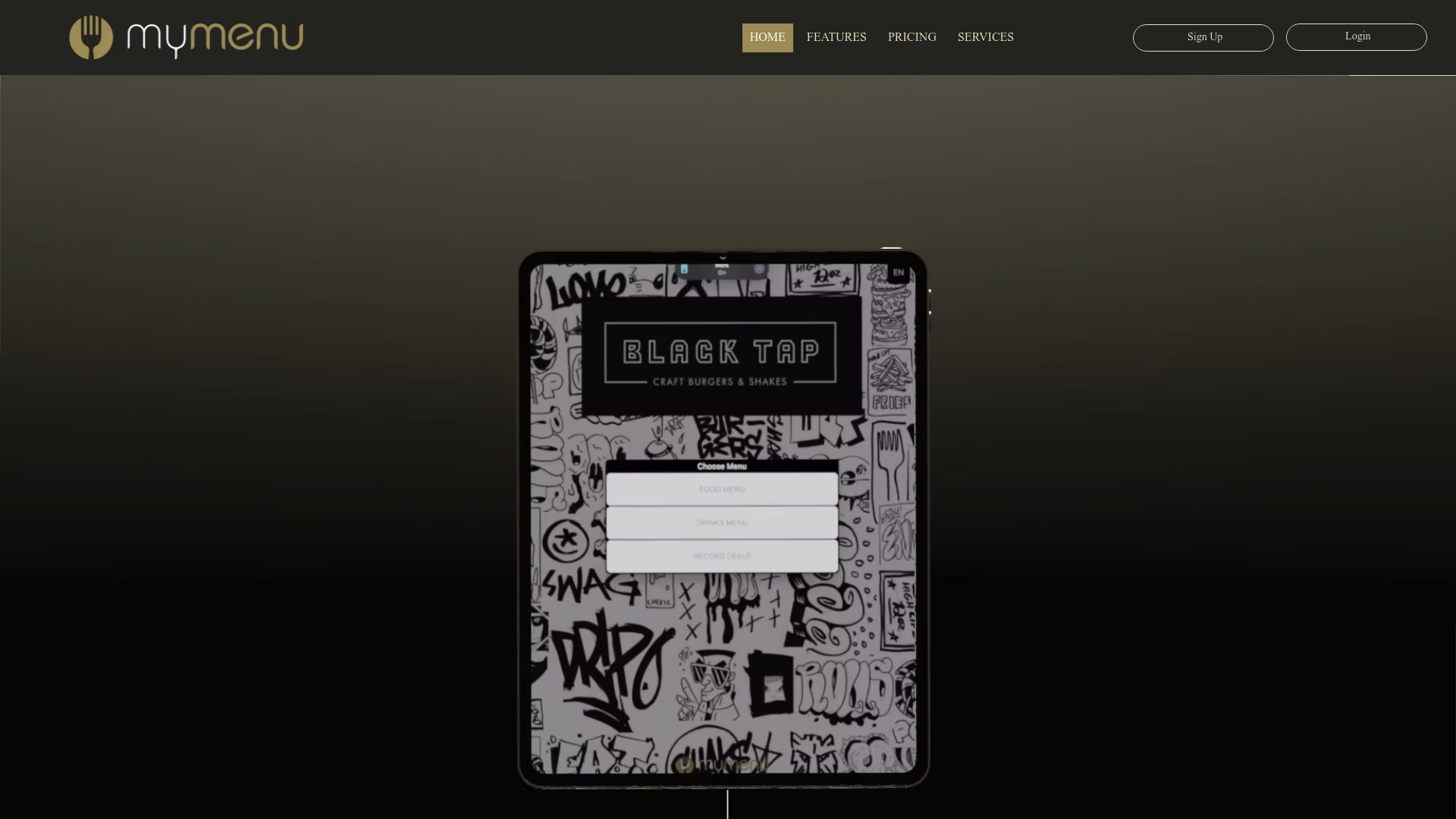
Mydigimenu was built specifically for this. The platform’s QR menu solution turns every table into a data capture point, pulling guest preferences and order behavior into profiles you actually own. From there, CRM integration and built-in loyalty tools let you run behavior-triggered campaigns without stitching together a dozen separate apps. Whether you want to launch a personalized win-back campaign, enroll guests in a digital stamp card program, or promote a new dish to the guests most likely to order it, Mydigimenu gives you the infrastructure to do it. Explore plans and pricing to find the right fit for your restaurant’s size and goals.
FAQ
What is the role of targeted marketing in restaurants?
Targeted marketing in restaurants means delivering specific offers and messages to defined guest segments based on behavior, preferences, and visit history. It replaces broad advertising with precision that increases conversion rates and customer lifetime value.
How does personalization improve restaurant sales?
Personalized offers make 79% of customers more likely to visit and drive increased spend in over 50% of cases. Personalization works because it feels relevant rather than generic.
Why should restaurants avoid third-party delivery platforms?
Third-party apps take 20 to 30% commissions and retain all customer data, cutting into both margin and future marketing capability. Direct ordering channels return full profit and give restaurants the guest data they need for targeted campaigns.
What is 4 Walls Marketing for restaurants?
4 Walls Marketing uses every touchpoint inside the restaurant, including staff interactions, menu layout, receipts, and WiFi screens, to increase check size, capture loyalty signups, and encourage return visits without any external ad spend.
How do micro-influencers help restaurant marketing?
Micro-influencers with local followings build authentic trust with geographically concentrated audiences, producing direct bookings and foot traffic that larger, non-local creators typically cannot deliver.
Recommended
Interesting insights! Targeted marketing really can make a big difference by helping businesses connect with the right audience instead of reaching everyone. Just like a book publisher helps the right stories find the right readers, smart marketing helps restaurants build stronger relationships with customers. Thanks for sharing such practical tips in a clear and easy-to-understand way.
Targeted marketing has become essential for restaurants because broad campaigns rarely connect with the right audience anymore. Using customer preferences, location-based offers, and seasonal promotions can significantly improve engagement and repeat visits. I also think tracking the performance of each campaign is just as important as launching it, since the data helps refine future strategies. At Amazon Automations, we've seen similar principles apply across e-commerce. It's interesting how customer segmentation drives better results in different industries. I recently came across https://www.amazonautomations.com/ebay-automation while exploring automation strategies, and the parallels between digital marketing and restaurant growth are worth discussing.
Getting to know what customers actually prefer and finding the right audience for it can make a big difference in getting repeat business and pushing sales upward. Those general promotions usually don't give the same outcomes as personalized campaigns do. And yeah the same basic idea shows up when you are putting together a takeaway business plan because figuring out the target market, plus building solid marketing strategies, is kind of crucial for steady success over time.