
What is menu engineering? Boost profits and guest experience


TL;DR:
Menu engineering uses data to increase profitability and guide item placement.
Categorizing items into stars, plowhorses, puzzles, and dogs informs strategic decisions.
Regular analysis and digital tools enable continuous menu optimization and guest engagement.
Your menu is one of the most powerful sales tools your restaurant owns, yet most operators treat it as an afterthought. Research shows that a poorly structured menu can quietly drain revenue, with guests skipping high-margin items simply because they’re buried or poorly presented. Menu engineering changes that equation entirely. It’s a data-driven, strategic approach that combines financial analysis, thoughtful design, and smart product placement to help you sell more of what matters most. This guide explains what menu engineering is, why it’s a game-changer, and how you can put it to work for your restaurant or bar starting today.
Table of Contents
Key Takeaways
Point | Details |
Menu engineering defined | It is a strategic, data-driven process to optimize menu profitability and guest experience. |
Frameworks matter | Using the four-quadrant model and regular analysis leads to smarter menu decisions. |
Practical application | Effective menu engineering requires ongoing analysis, design changes, and guest feedback. |
Avoid pitfalls | Don’t ignore data or make random changes; follow structured processes to maximize outcomes. |
Digital tools help | Investing in digital menus makes engineering more efficient and responsive to trends. |
What is menu engineering?
Menu engineering is the practice of analyzing every item on your menu to understand two things: how profitable it is, and how popular it is. Armed with that data, you can make intentional decisions about pricing, placement, descriptions, and design that guide guests toward your best items. As menu optimization insights show, menu engineering uses data to maximize both the profit and popularity of menu items, turning your menu from a simple list into a revenue-generating tool.
Traditional menu planning often relies on intuition, chef preference, or what’s easy to source. Menu engineering replaces guesswork with a structured system. The difference is significant, and the table below illustrates it clearly.
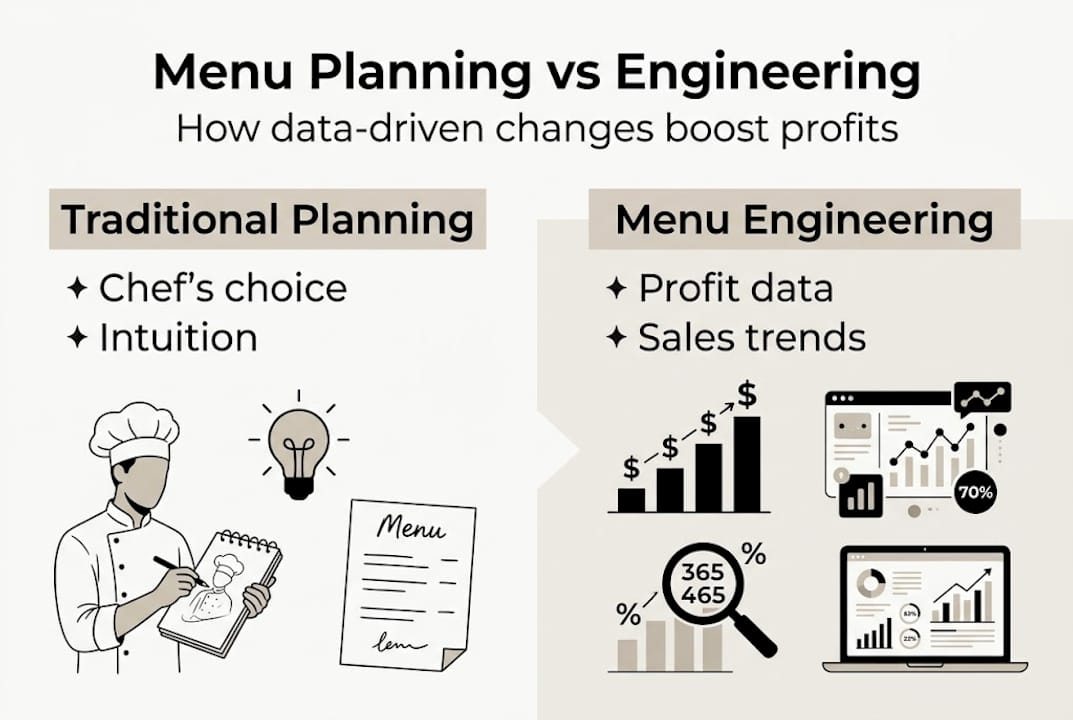
Feature | Traditional menu planning | Menu engineering |
Decision basis | Intuition and tradition | Sales data and cost analysis |
Item review frequency | Rarely or seasonally | Ongoing and systematic |
Pricing approach | Cost-plus or arbitrary | Margin-optimized and strategic |
Design strategy | Aesthetic preference | Psychology-driven layout |
Outcome focus | Variety and coverage | Profitability and satisfaction |
The framework at the heart of menu engineering categorizes every item into one of four groups: Stars (high profit, high popularity), Plowhorses (low profit, high popularity), Puzzles (high profit, low popularity), and Dogs (low profit, low popularity). This categorization guides every design and pricing decision you make.
The main goals of menu engineering include:
Increasing overall menu profitability without raising prices across the board
Identifying underperforming items that drag down margins
Highlighting high-margin dishes through strategic placement and design
Improving guest decision-making and satisfaction
Reducing menu complexity while maximizing revenue per cover
For a broader look at how layout shapes earnings, the effective menu design guide covers the visual principles that make engineered menus even more powerful.
Core principles and frameworks of menu engineering
Understanding the four-quadrant model is where menu engineering becomes truly actionable. Each quadrant tells a story about an item’s performance and suggests a clear path forward.
Stars are your menu heroes. They sell well and generate strong margins. Protect them, feature them prominently, and resist the urge to change them. Plowhorses are beloved but costly. Guests order them often, but the profit per dish is thin. Your goal here is to gently raise prices, reduce portion size, or bundle them with higher-margin sides. Puzzles are hidden gems. They’re profitable but underordered, often because guests don’t know about them. Better placement, stronger descriptions, and staff recommendations can ignite their sales. Dogs are the tough calls. Low profit and low popularity. They consume kitchen resources without reward. Consider removing or reimagining them entirely.
Here’s how a sample data table might look when you apply this thinking to real items:
Menu item | Food cost % | Weekly orders | Gross profit | Quadrant |
Signature burger | 28% | 320 | $9.80 | Star |
Caesar salad | 38% | 290 | $4.20 | Plowhorse |
Truffle fries | 22% | 85 | $8.50 | Puzzle |
Mushroom soup | 42% | 40 | $2.10 | Dog |
This kind of snapshot empowers smarter decisions in minutes rather than weeks of debate.
The menu optimization process reinforces that analyzing item profitability and popularity together, rather than separately, is what makes the framework so effective.
To categorize your own items, follow these steps:
Pull sales data for each item over a defined period, ideally 90 days.
Calculate the food cost percentage for each item.
Determine gross profit per item (selling price minus food cost).
Calculate average gross profit and average popularity across all items.
Plot each item against those averages to assign its quadrant.
Prioritize action steps based on quadrant status.
Pro Tip: Use at least three months of sales history before making permanent changes. Short data windows can misrepresent seasonal trends and distort your quadrant assignments.
Menu engineering in practice: Analysis, design, and guest impact
Knowing the frameworks is just the start. Here’s how menu engineering comes to life in a real restaurant or bar setting.
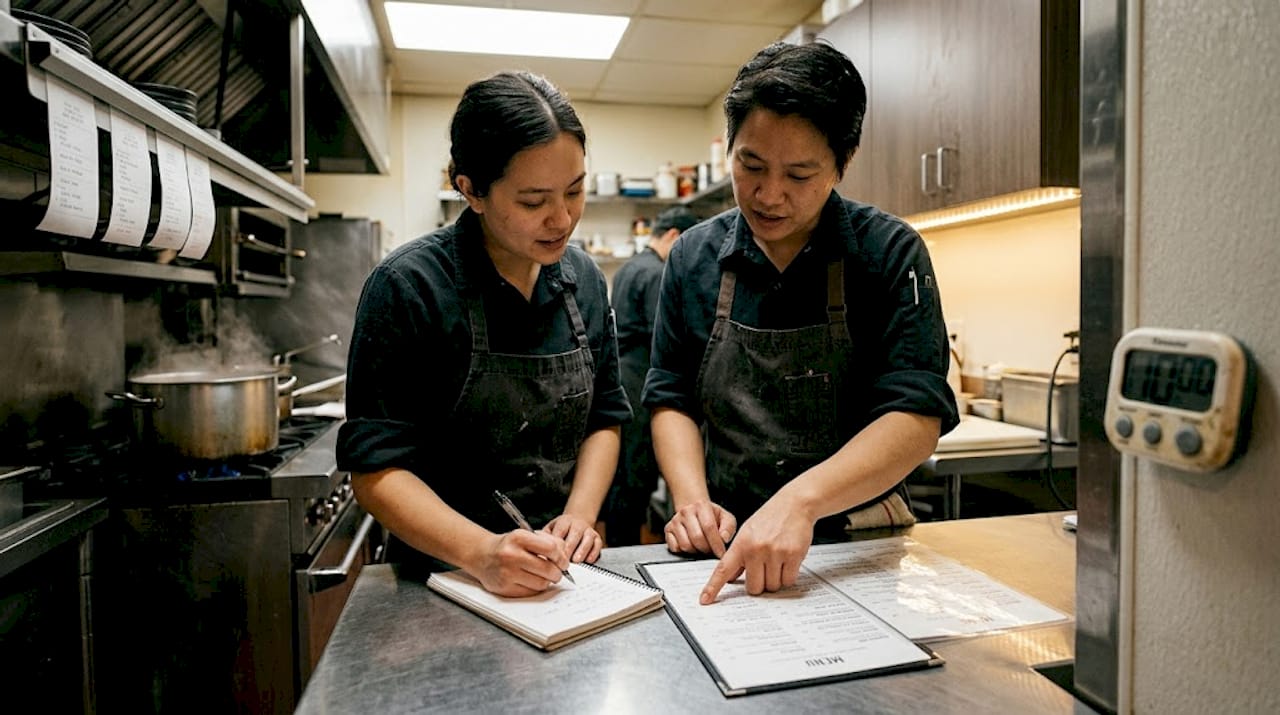
The process begins with honest data collection. You need food cost, sales volume, and gross profit data for every item on your current menu. Most POS systems can generate this, though you may need to cross-reference purchasing records for accurate food costs. Once your data is clean, the analysis phase reveals where your menu is leaking profit and where opportunity is hiding.
With that insight, follow this workflow:
Analyze: Categorize every item using the four-quadrant model.
Re-design: Adjust layout, item placement, typography, and descriptions to spotlight Stars and Puzzles.
Test: Run the updated menu for 60 to 90 days and track changes in item sales mix.
Repeat: Use the new data to refine further. Menu engineering is a cycle, not a one-time project.
Design changes deserve special attention because the visual experience of a menu shapes guest choices before a single word is read. Menu design trends confirm that redesigning menus with engineering principles can increase guest engagement by 15% or more. That’s a meaningful shift in behavior that directly affects your bottom line.
“The best menus don’t just list food. They guide guests on a journey that feels effortless while steering them toward the choices that benefit both the kitchen and the experience.”
Small design moves create big results. Placing a high-margin item at the top right of a menu page, where eyes naturally land first, can boost its orders significantly. Using boxes or shading to frame featured items draws attention without feeling pushy. Descriptive, sensory language makes a dish more appealing and justifies a stronger price point. For inspiration on visual structure, digital menu layout examples offer practical templates that translate engineering logic into guest-friendly formats.
Pro Tip: Avoid listing prices in a single vertical column on the right side of the page. This layout invites guests to scan prices first rather than descriptions, which undermines your ability to sell on value.
Common pitfalls and mistakes in menu engineering
Applying menu engineering is powerful, but knowing the common pitfalls ensures you stay on track.
The most damaging mistake is making changes based on incomplete or short-term data. A single bad week can make a Star look like a Dog if you’re not reviewing a long enough window. Mistakes in menu engineering often stem from incomplete data or neglecting guest feedback, two factors that can cause well-intentioned changes to backfire.
Here are the most common pitfalls and how to sidestep them:
Ignoring contribution margin: Focusing only on food cost percentage misses the full picture. A $4 profit on a $10 dish can outperform a $3 profit on a $20 dish if volume is high.
Overhauling everything at once: Changing the entire menu simultaneously makes it impossible to isolate what’s working. Test section by section.
Neglecting staff training: Your team sells your menu. If they don’t understand or believe in the featured items, no design change will rescue the effort.
Skipping guest feedback: Sales data tells you what guests ordered. Feedback tells you why, and why they didn’t order something else.
Treating menu engineering as a one-time event: Costs, trends, and guest preferences shift. A menu that’s engineered once and forgotten will drift out of alignment quickly.
“Short-term thinking is the enemy of sustainable menu profitability. The restaurants that win are those that build a culture of regular, data-informed review rather than reactive, panic-driven changes.”
Regular review cycles are non-negotiable. Schedule a formal menu review at least twice a year, and consult your bar menu design steps playbook if you manage a beverage program alongside your food menu, since the same engineering logic applies to drinks with equal force. Staying connected to menu digitization insights can also help you build systems that make continuous review faster and less labor-intensive.
Our perspective: The real keys to menu engineering success
The technical side of menu engineering is well-documented, but experience reveals something the frameworks don’t always say out loud: the biggest barrier is rarely data, it’s culture.
Restaurant owners who succeed with menu engineering treat it as a team sport. They involve their kitchen staff in the conversation, listen to their servers’ daily observations, and cross-reference sales data with actual guest comments. Data without context is just numbers. The magic happens when a general manager walks the floor, hears a guest rave about a Puzzle item they almost didn’t order, and uses that insight to justify a prominent feature placement on the next menu revision.
There’s also a temptation to over-engineer. More categories, more data points, more frequent changes can create confusion rather than clarity. The most effective operators we’ve seen start with three simple questions: What sells? What makes money? What do guests love? From there, layout and engagement strategies become the bridge between insight and action.
Menu engineering works best when it’s treated as ongoing dialogue between your data, your team, and your guests. Not a formula. A conversation.
Take your menu further: Digitize and optimize
Menu engineering gives you the strategy. Digital tools give you the speed and flexibility to act on it in real time.
With MyDigiMenu, you can create a QR menu that’s easy to update whenever your engineering analysis calls for a change, whether that means repositioning a Puzzle item or quietly retiring a Dog. Our restaurant digital menus are built for ongoing optimization, with customizable layouts, rich food imagery, and data-informed design options that bring your engineering strategy to life. Instead of reprinting menus every time you refine your approach, you iterate instantly and keep your menu performing at its best every single day.
Frequently asked questions
What is the main goal of menu engineering?
The main goal is to increase a restaurant’s profitability by analyzing and optimizing the menu based on both popularity and profit margin data. As menu optimization insights confirm, using data to guide these decisions maximizes both profit and item popularity simultaneously.
How often should a restaurant engineer its menu?
It is recommended to review and update the menu at least twice a year or whenever significant changes in costs, trends, or sales patterns arise. Regular reviews are essential for keeping the menu aligned with current performance realities.
What type of data is needed for menu engineering?
You need food cost, sales volume, and gross profit data for each menu item to perform accurate analysis. The menu optimization process emphasizes that analyzing profitability and popularity together is what makes the framework actionable.
Can menu engineering improve customer experience?
Yes, a well-engineered menu guides guests to better choices and streamlines decision-making, which leads to higher satisfaction. Innovative design principles show that menus redesigned with engineering thinking can increase engagement by 15% or more.
Are digital menus suitable for menu engineering?
Digital menus make menu engineering easier and more dynamic by allowing quick updates, data tracking, and real-time layout testing. The same engineering principles that apply to print menus translate powerfully into digital formats, with the added benefit of instant iteration.
Recommended
Comments