
Unlock better guest experiences with app-free ordering

TL;DR:
Traditional apps have very low conversion and retention rates, causing missed revenue opportunities.
App-free QR and web ordering increase order volume, check size, and improve guest experience.
A hybrid approach using both methods optimizes loyalty benefits and first-time guest engagement.
Traditional ordering apps lose up to 98% of potential customers before a single order is placed. That staggering drop-off is not a design flaw you can patch with a better onboarding screen. It is a structural problem baked into the app model itself. QR ordering is preferred by 70% of guests over dedicated apps for restaurant visits, and app-free solutions consistently drive higher order volumes and bigger checks. This guide explains why app-based strategies quietly drain revenue, how frictionless alternatives transform the guest experience, and exactly how to implement them in your venue.
Table of Contents
Key Takeaways
Point | Details |
Reduce ordering friction | App-free solutions remove barriers by eliminating downloads, increasing guest engagement. |
Drive higher sales | App-free ordering can increase order volume by up to 40% and boost check averages by 20%. |
Deliver inclusivity and accessibility | QR and web menus welcome more guests and make ordering easier for all demographics. |
Hybrid strategies work best | Apps remain valuable for loyalty, but app-free options reach more guests—ideal for one-timers. |
Why traditional apps leave revenue on the table
Imagine a first-time guest scanning your table card, only to be redirected to an app store download page. Most of them will simply put their phone down and wait for a server. That moment of friction is costing you real money, and it happens far more often than most operators realize.
The numbers paint a sobering picture. App conversion sits at 1 to 2% from install to purchase, meaning that for every hundred guests who encounter your app, only one or two complete an order. Even guests who do install the app rarely stick around. Day-30 retention for food apps is only 3.7%, which means the vast majority of people who download your app have already abandoned it within a month.
The challenges tied to app-based ordering go beyond just low install rates. Consider the full picture:
Install friction: Guests must find, download, and create an account before ordering, adding three to five minutes to the process
Slower first-time experience: New users navigate unfamiliar interfaces without guidance, leading to cart abandonment
Device compatibility issues: Older phones or limited storage can prevent installation entirely
Missed upsell moments: Without intuitive prompts, guests order only what they already know they want
Operational strain: Staff must troubleshoot app issues instead of focusing on hospitality
The irony is that apps were designed to create loyalty, but they only serve guests who are already loyal. For the broader audience of first-time visitors, occasional diners, and tourists, apps are a wall, not a welcome mat.
Metric | App-based ordering | App-free ordering |
Install-to-order conversion | 1 to 2% | Up to 40% higher order volume |
Day-30 retention | 3.7% | Not applicable, no install needed |
First-time guest friction | High | Minimal |
Upsell opportunity | Limited | Built-in prompts available |
“The biggest threat to your digital ordering strategy is not your competitors. It is the moment a guest decides the download is not worth it.”
For venues relying on walk-in traffic, events, or tourism, modern online ordering systems that require no app download are not just a convenience. They are a competitive necessity. Now that we have seen how apps can be a barrier rather than a bridge, let us explore alternatives that actually drive engagement.
App-free ordering: Clear advantages for guests and operators
With the limitations of apps clear, let us see how app-free ordering unlocks tangible results and a better guest experience. The shift away from app dependency is not just about removing friction. It is about actively creating conditions where guests spend more, return more often, and leave happier.
The evidence is compelling. QR-based ordering drives a 20 to 40% increase in monthly order volumes, and average check sizes climb by 20% when guests browse digitally at their own pace. That 20% lift in check size alone can transform the profitability of a mid-volume venue. Guests who browse visually rich menus, complete with mouthwatering food photography and video, tend to order more sides, premium items, and drinks without feeling pressured.
Why app-free ordering works for a wider audience:
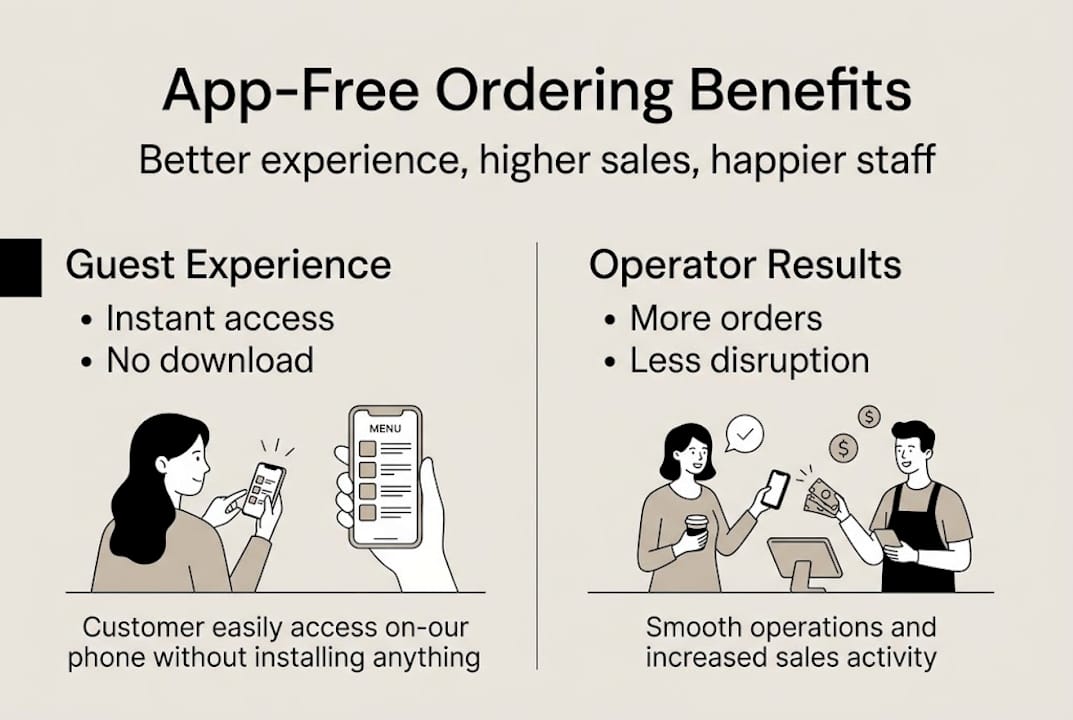
No download required means every guest, regardless of phone model or storage space, can order instantly
Older demographics and international visitors face zero technical barriers
Guests control the pace of their experience, which reduces perceived wait times
Multilingual menus serve diverse guest profiles without extra staff effort
Staff spend less time taking orders and more time delivering exceptional hospitality
The operational benefits for your team are just as significant. Fewer interruptions for order-taking means servers can focus on table experience, refills, and genuine connection. That shift in role, from order-taker to hospitality ambassador, elevates the entire dining atmosphere.
Feature | App-based | QR or web-based |
Guest accessibility | Requires install | Instant, browser-based |
Average check impact | Baseline | Up to 20% higher |
Staff interruptions | Moderate to high | Significantly reduced |
Upsell capability | Limited | Dynamic, built into menu |
Setup time for venue | Weeks | Days |
Pro Tip: Embed upsell prompts directly into your QR menu options at the item level. When a guest adds a burger, a prompt suggesting a craft beer or loaded fries can add two to four dollars to the average check with zero staff effort.
App-free solutions also support the kind of transforming customer experience that turns a one-time visitor into a regular. When ordering feels effortless, guests associate that ease with your brand, not the technology behind it.
Expert nuances: When apps still add value
While app-free options stand out, there is also room for nuanced strategies where apps excel. The honest truth is that apps are not universally bad. They are simply the wrong tool for the wrong audience when used as the primary ordering channel.
For venues with a strong base of repeat customers, a dedicated app can deliver real advantages. Order completion is 4x faster in apps for loyal customers who already know the interface and have saved payment details. That speed matters during a busy lunch rush when a regular just wants their usual order placed in thirty seconds.
Apps also shine in specific scenarios:
Loyalty programs: Push notifications, digital stamp cards, and personalized offers are easier to deliver through an installed app
Saved preferences: Regulars benefit from stored order history and payment methods
Subscription models: Monthly meal plans or coffee subscriptions are well-suited to app environments
High-frequency venues: Coffee shops and fast-casual spots where guests visit daily gain the most from app speed
The smart approach for most venues is a hybrid model. Use QR and web-based ordering as the default for all guests, especially first-timers, walk-ins, and event attendees. Reserve app-based ordering as an optional upgrade for loyalty program members who want the speed and personalization benefits.
“QR is the right tool for one-off visits and new guests. Apps earn their place when loyalty and repeat behavior are already established.”
This hybrid thinking aligns with the broader shift in guest engagement strategies that leading venues are adopting. Rather than forcing all guests into a single ordering channel, the goal is to match the tool to the guest relationship. New guest? Frictionless QR. Loyal regular? App speed and rewards. That nuance is what separates thriving venues from those still chasing download counts.
Implementing app-free ordering: Steps and best practices
Understanding the pros and cons, here are actionable steps for operators ready to implement app-free ordering. Getting this right the first time saves weeks of troubleshooting and ensures your guests experience the seamless flow you are aiming for.
Step-by-step rollout guide:
Choose a platform built for hospitality. Look for a solution that supports QR menus, web-based ordering, and online delivery integration without requiring your guests to install anything. Prioritize platforms with upsell features and analytics dashboards.
Design your menu for visual impact. Upload high-quality photos and short food videos for your top-selling items. Guests who see what they are ordering spend more. Organize categories logically, with popular items and high-margin dishes near the top.
Place QR codes strategically. Every table, bar seat, and takeout counter should have a clearly visible QR code. Add a short instruction line such as “Scan to order” in large, readable font. Do not assume guests know what to do.
Train your team on the new flow. Staff should understand how orders appear in the system and how to assist guests who need help scanning. A two-minute briefing before service is enough for most teams.
Enable upsell prompts from day one. Configure item-level suggestions before your first service. This is where the revenue lift happens, and it costs nothing extra to set up.
Review your metrics monthly. Track order volumes, average check sizes, and popular items. Use that data to refine your menu layout and adjust upsell pairings.
One restaurant case study found a 40% monthly order increase after switching to QR-based ordering, alongside a 20% higher average check. Those results did not come from a redesign or a marketing campaign. They came from removing the friction between guest and order.
Pro Tip: Review your digital menu setup every four weeks. Swap out low-performing items, update seasonal specials, and refresh your upsell pairings. Small monthly tweaks compound into significant revenue gains over a quarter.
The most common pitfall is a cluttered menu interface. If guests cannot find what they want in three taps or less, they disengage. Keep categories clean, descriptions concise, and navigation intuitive.
Why operators are rethinking digital ordering in 2026
The last two years delivered a clear verdict: simplicity wins. Venues that invested in custom app development often found themselves with a polished product that most guests never used. Meanwhile, operators who adopted QR and web-based ordering saw 40% order increases with a fraction of the setup cost and timeline.
There is a persistent myth in hospitality that technological complexity signals innovation. In reality, the most innovative move a venue can make is removing unnecessary steps from the guest journey. Every tap, every loading screen, every permission request is a small erosion of the guest’s enthusiasm.
App-free ordering reframes what mobile ordering transformation actually means. It is not about building the most sophisticated platform. It is about making the path from craving to order as invisible as possible. The venues winning in 2026 are not the ones with the most features. They are the ones whose guests barely notice the technology because it simply works.
The hard-won lesson from operators who made the switch early is this: app-free ordering delivers measurable results fast, with lower risk and lower cost than any custom app project. That is not a compromise. That is a smarter allocation of your innovation budget.
Explore app-free ordering solutions with My Menu
If you are ready to join the shift toward frictionless ordering, MyDigiMenu.com offers the tools to make it happen without a steep learning curve or a lengthy setup process.
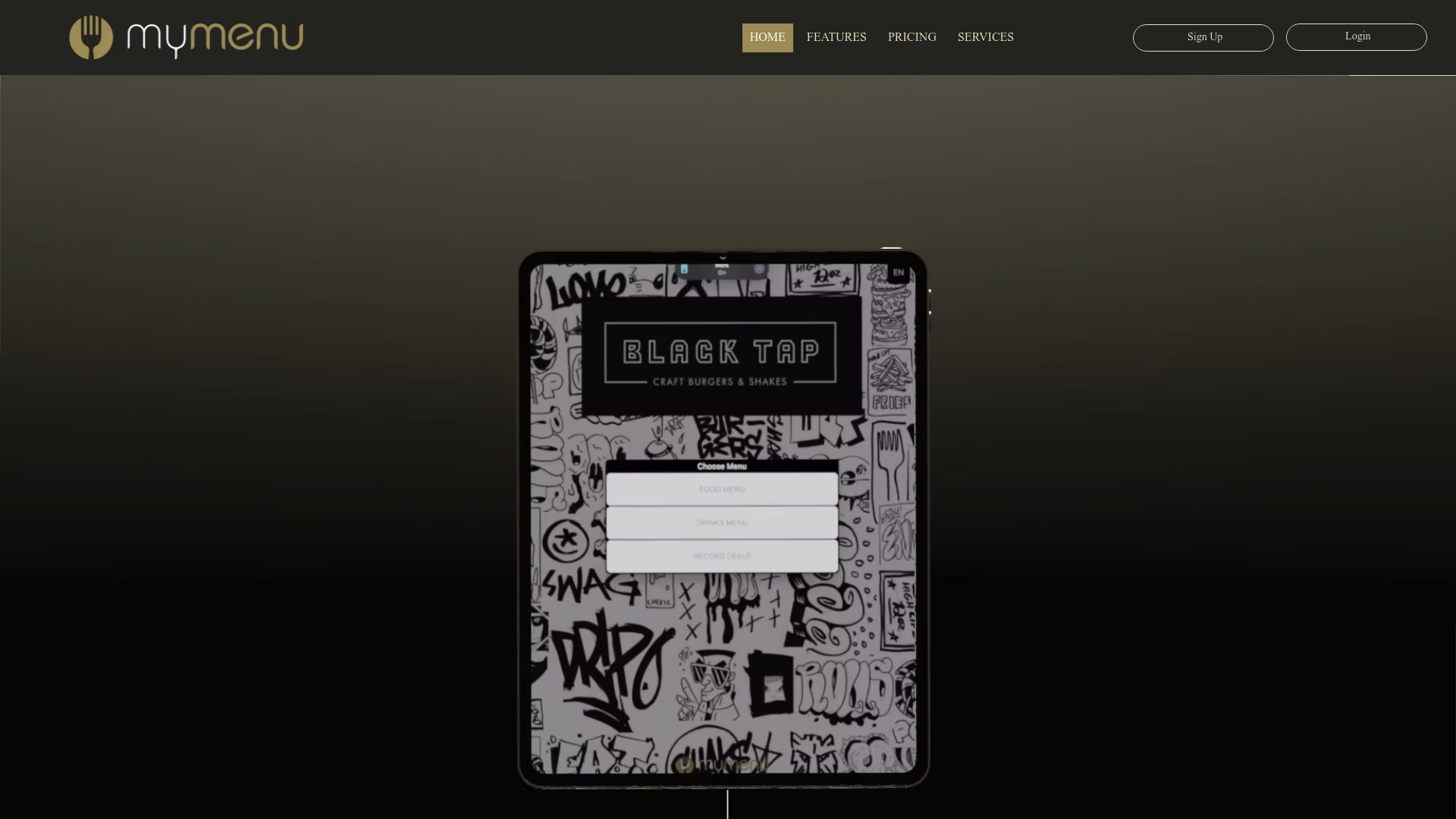
Explore the QR menu generator to create a visually rich, instantly accessible menu your guests can use the moment they sit down. Compare tablet and mobile options with the full range of digital menu options to find the format that fits your venue’s style. When you are ready to commit, review the flexible plans and pricing to find a tier that matches your volume and ambitions. The next order your guest places could be faster, bigger, and more satisfying for everyone involved.
Frequently asked questions
How much can app-free ordering increase restaurant sales?
App-free ordering boosts order volumes by 20 to 40% and raises average check sizes by 20%, based on documented case studies from QR-based restaurant deployments.
Is QR or web ordering better for first-time guests?
Yes. 70% of guests prefer QR over dedicated apps for one-time restaurant visits because it requires no download and works instantly on any device.
Do app-free solutions support upselling?
Absolutely. QR menus can display item-level suggestions for drinks, sides, or desserts, and average checks climb by up to 20% when those prompts are configured correctly from the start.
Should we still use a standalone app for loyalty?
Apps remain effective for repeat guests because order completion is 4x faster for users with saved preferences, but most venues see better overall results by making app-free ordering the primary channel for all guests.
Recommended
Comments