
Improving Restaurant Table Turnover for Maximum Revenue

TL;DR:
Optimizing restaurant table turnover involves streamlining seating, ordering, payment, and reset phases without rushing guests. Layout, technology, and staff training collectively improve flow, increasing revenue and guest satisfaction. Data tracking and careful implementation are essential to enhance efficiency while maintaining a quality dining experience.
Table turnover rate is defined as the number of times a restaurant seats new guests at the same table during a given service period. Improving the restaurant table turnover process is the single most direct lever operators have for increasing revenue without adding a single seat. A restaurant that turns a four-top three times during dinner service earns dramatically more than one that turns it twice, and the difference rarely comes down to rushing guests. It comes down to operational design. From reservation timing and floor layout to digital ordering and staff choreography, every phase of the dining cycle holds untapped revenue potential.
What is the restaurant table turnover process and where to improve it
The table turnover process covers every minute from when a guest is seated to when the next party sits down. It breaks into seven distinct phases: seating and settling, ordering, food delivery, eating, dessert and coffee, payment, and table reset. Each phase has a measurable duration, and each one is a candidate for improvement.
The table below shows typical versus optimized timing for each phase in a casual dining setting:
Phase | Typical Duration | Optimized Target |
Seating and settling | 5-7 min | 2-3 min |
Ordering | 8-12 min | 4-6 min |
Food delivery | 12-18 min | 8-12 min |
Eating | 20-30 min | 20-30 min |
Dessert and coffee | 10-15 min | 8-10 min |
Payment | 8-12 min | 2-3 min |
Table reset | 5 min |
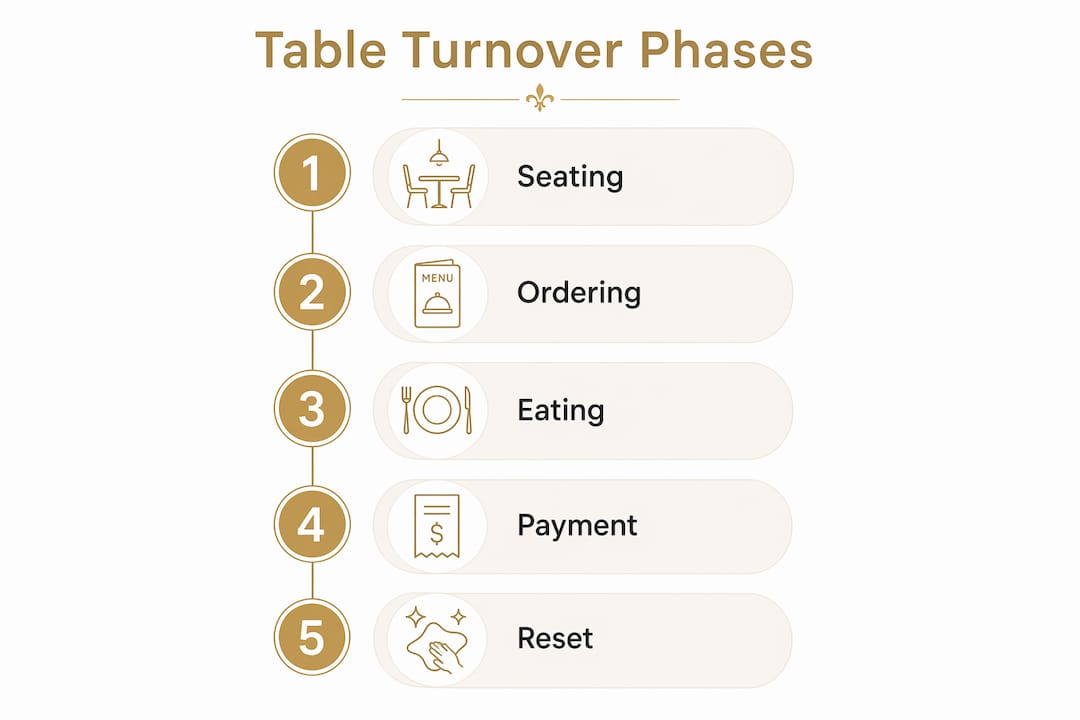
Notice that the eating phase carries no optimization target. Cutting into a guest’s meal is the fastest way to destroy satisfaction scores and repeat visits. The real gains live in the bookend phases: getting guests settled and ordering faster, and then clearing, paying, and resetting with precision. Typical dinner service turns tables approximately three times with an average turn time of 45 to 60 minutes. That means a 10-minute reduction per turn adds a fourth seating across a busy Friday night.
Pro Tip: Measure each phase separately for one full week before making any changes. You cannot fix what you have not located. A simple stopwatch log per table reveals exactly where your service rhythm breaks down.
How does restaurant layout affect seating turnover speed?
Floor plan design is a silent driver of how fast guests move through your dining room. Most operators underestimate it because the results are invisible until you compare before and after data.
The most impactful layout changes include:
Prioritize two-tops and flexible four-tops. Adding more two-tops and convertible four-tops reduces the frequency of mismatched seating, where a party of two occupies a six-seat booth. Mismatched seating wastes capacity and slows the host’s ability to seat incoming parties efficiently.
Position the host stand for full sightlines. A host who can see every table without walking the floor can seat incoming guests the moment a table clears, shaving two to three minutes off the gap between turns.
Cluster server stations near high-volume sections. When servers walk shorter distances to reach POS terminals, drink stations, or expo windows, the ordering and delivery phases compress naturally.
Use visual and acoustic design as pacing cues. Brighter lighting, upbeat music at moderate volume, and open sightlines to the exit subtly signal a livelier pace without a single word from staff. Fine dining venues use the opposite approach intentionally. Match your environment to your desired turn time.
Build in a dedicated table reset zone. A small cart or station stocked with clean linens, condiments, and place settings near each section allows bussers to reset a table in under two minutes rather than making multiple trips to a central supply area.
The goal is not to make guests feel like they are on a conveyor belt. It is to remove every physical obstacle that slows the natural rhythm of a meal.
What technology and reservation systems best support faster table turnover?
Technology does not replace good service. It removes the friction points that good service cannot overcome alone.
Tool Category | Primary Benefit | Impact on Turn Time |
Staggered reservation software | Spreads kitchen load evenly | Reduces order backlog by 15-20 min |
Waitlist management with SMS | Guests arrive ready to sit | Cuts seating gap to under 2 min |
Table management software | Real-time status tracking | Eliminates host guesswork |
Digital menus (QR or tablet) | Guests order faster and more confidently | Reduces ordering phase by 4-6 min |
Tableside payment tech | Eliminates payment wait | Saves 15+ minutes per table |
Staggering reservations by 10 to 15 minutes optimizes kitchen order waves and spreads guest seating evenly across the service window. This prevents the common scenario where 20 guests arrive simultaneously, the kitchen drowns in tickets, and every table’s food delivery phase stretches by 10 minutes or more.
Digital menus are among the highest-return investments for cafe table turnover improvement and full-service restaurants alike. When guests can browse, ask questions via item descriptions, and place orders without waiting for a server to appear, the ordering phase shrinks noticeably. Menu simplification combined with cross-use ingredients also reduces kitchen ticket times, compressing the food delivery phase from the back-of-house side.
Pro Tip: Pair your digital menu with a tableside payment option. The two together target the two longest non-eating phases in the cycle. Guests who order digitally and pay digitally experience a smoother, faster meal without feeling managed.
What staff training practices boost turnover without rushing guests?
The most technically equipped restaurant still fails on turnover if the team does not execute with coordinated precision. Staff training for seating efficiency is not about speed. It is about reading the room and choreographing the exit.
Train servers to read meal progression cues. When guests push plates to the center of the table, set down utensils, or lean back in their chairs, the meal is functionally over. A trained server clears those plates within 90 seconds. This single habit, applied consistently, signals meal completion without a word being spoken.
Present the check proactively. Proactive check presentation after dessert plates are cleared acts as a natural, unhurried signal that the dining experience is complete. Guests who receive the check without asking for it rarely feel rushed. Guests who wait 12 minutes for a check after finishing their meal feel neglected.
Build a communication loop between servers, bussers, and the host. The moment a table pays, the busser should be notified immediately. The host should know the table will be ready in 90 seconds. This zero-lag reseating system is what separates a restaurant that turns three times from one that turns twice. Strong FOH-kitchen communication during peak hours maintains a consistent service pace that benefits every table simultaneously.
Cross-train staff for peak coverage. A server who can bus a table, or a busser who can run food, eliminates the single points of failure that create bottlenecks during the dinner rush. Role clarity matters during normal service, but flexibility matters during peak hours.
Rehearse the closing sequence. Run the dessert-plate-clear, check-drop, and table-reset sequence as a timed drill during pre-shift meetings. Teams that practice the sequence execute it smoothly under pressure.
Pro Tip: Owners often mistake lingering guests as the cause of slow turnover. The real culprit is almost always a failure to signal meal completion through exit choreography. Fix the signal before you blame the guest.
How do you measure success and troubleshoot turnover challenges?
Tracking turnover improvement requires three core metrics: average turn time per table, tables turned per service period, and revenue per available seat hour (RevPASH). RevPASH is the hospitality industry’s standard for measuring how effectively a restaurant monetizes its physical capacity.
Key tracking practices include:
Log turn times by table and day part. Lunch and dinner have different natural rhythms. A 45-minute turn at lunch is slow. At a fine dining dinner service, it is fast. Segment your data before drawing conclusions.
Identify your longest phase consistently. If payment always takes 10 minutes, that is a technology problem. If ordering always takes 15 minutes, that is a menu complexity or staffing problem. The data tells you where to invest.
Survey guests on pacing, not just food. A simple post-meal feedback question about service pace reveals whether your optimization efforts are creating pressure or simply improving flow.
Avoid uneven server load. When one server covers six tables and another covers two, the overloaded server becomes the bottleneck for the entire floor. Balanced section assignments protect both service quality and turn times.
Test one change at a time. Changing the floor plan, the menu, and the reservation system simultaneously makes it impossible to attribute results. Run a two-week test on a single variable, measure the impact, then move to the next.
Key takeaways
Improving restaurant table turnover is a system-level discipline that requires optimizing layout, technology, and staff behavior in concert, not in isolation.
Point | Details |
Target bookend phases | Compress seating, ordering, payment, and reset time. Never cut into the eating phase. |
Redesign the floor plan | Add two-tops and flexible four-tops to reduce mismatched seating and speed host decisions. |
Deploy digital ordering and payment | Digital menus and tableside payment together target the two longest non-eating phases. |
Train closing choreography | Proactive plate clearing and check presentation signal meal completion without pressure. |
Measure RevPASH, not just covers | Revenue per available seat hour reveals true capacity utilization across every service period. |
Why flow beats speed every time
I have watched operators invest in new POS systems, redesign their dining rooms, and hire additional staff, only to see turn times barely move. The reason is almost always the same: they were solving for speed when they should have been solving for flow.
Flow is the feeling a guest has when the meal progresses naturally, without awkward pauses or sudden rushes. Speed is what happens when a server drops the check before the dessert plate is cold. Guests notice the difference immediately, and they vote with their return visits.
The most effective operators I have observed treat the dining experience like a well-rehearsed performance. Every role has a cue. The busser does not wait to be asked. The host does not wait for a visual confirmation from across the room. The server does not disappear after the entree lands. When those cues fire in sequence, a 55-minute turn feels generous to the guest and profitable to the operator.
Technology is the enabler that makes consistent execution possible at scale. A reservation and table management system removes the guesswork from seating. A digital menu removes the delay from ordering. Tableside payment removes the friction from closing. None of these tools replace the human judgment that makes a dining room feel alive. They free your team to focus on the moments that matter most.
— Abhi
How Mydigimenu helps you turn tables faster and smarter
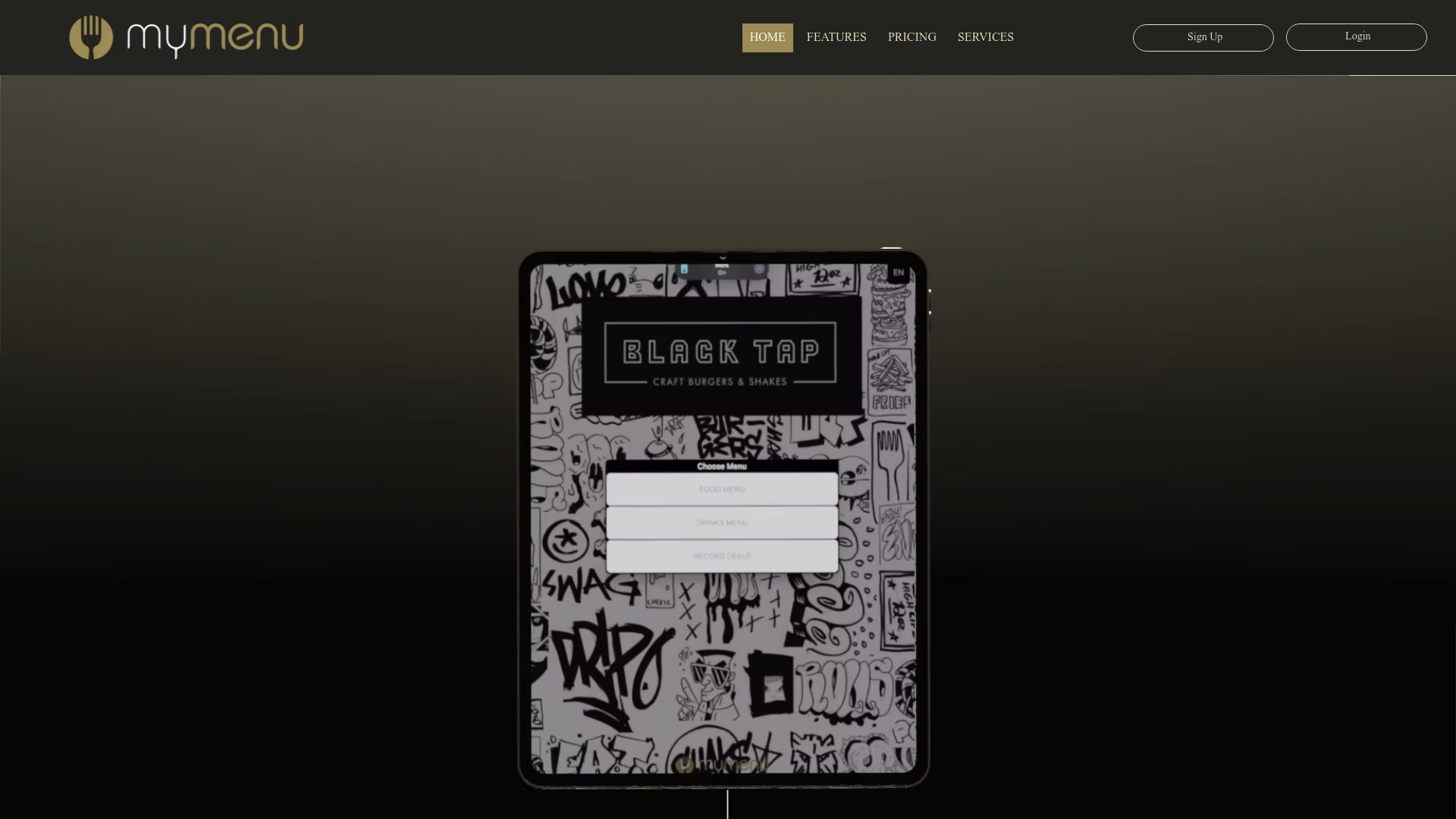
Mydigimenu is built for exactly the kind of operational precision this article describes. The platform’s digital tablet and QR menus compress the ordering phase by letting guests browse, customize, and place orders at their own pace, without waiting for a server to appear. The QR menu requires no app download, which means zero friction from the guest’s first interaction. Mydigimenu also integrates with reservation and table management workflows, giving your host team real-time visibility into table status so reseating happens the moment a table clears. For restaurant owners ready to turn the science of table turnover into measurable revenue, Mydigimenu offers a free plan to get started today.
FAQ
What is a good table turnover rate for restaurants?
Typical dinner service turns tables approximately three times with an average turn time of 45 to 60 minutes. Fast casual venues target shorter turns, while fine dining venues prioritize longer, higher-value experiences.
How can digital menus improve table turnover?
Digital menus reduce the ordering phase by 4 to 6 minutes per table by letting guests browse and order without waiting for server availability. Combined with tableside payment, they target the two longest non-eating phases in the dining cycle.
What is the fastest way to reduce table reset time?
Operators who track and optimize the reset phase can reduce it from a typical 5 minutes to 1 to 2 minutes by positioning reset supplies near each section and training bussers to begin clearing the moment payment is confirmed.
How do staggered reservations help with turnover?
Staggering reservations by 10 to 15 minutes prevents simultaneous arrivals that overwhelm the kitchen and delay food delivery for every table. Spreading the seating load evenly keeps order waves manageable and service pacing consistent.
Does improving turnover hurt guest satisfaction?
Improving turnover through flow optimization, closing choreography, and technology does not reduce satisfaction. Rushing guests by cutting into their meal time does. The distinction is the entire foundation of a successful turnover strategy.
Recommended
Comments